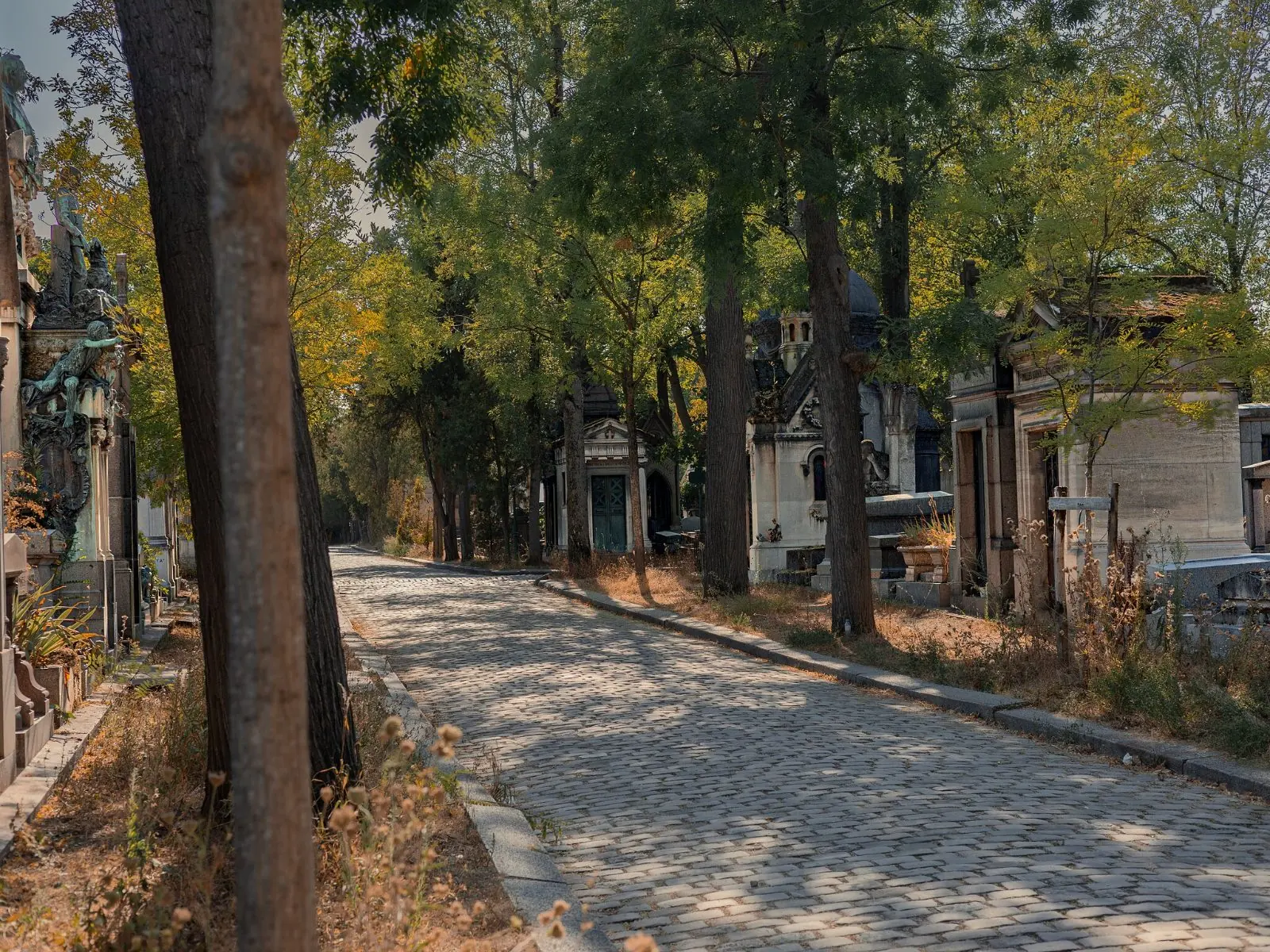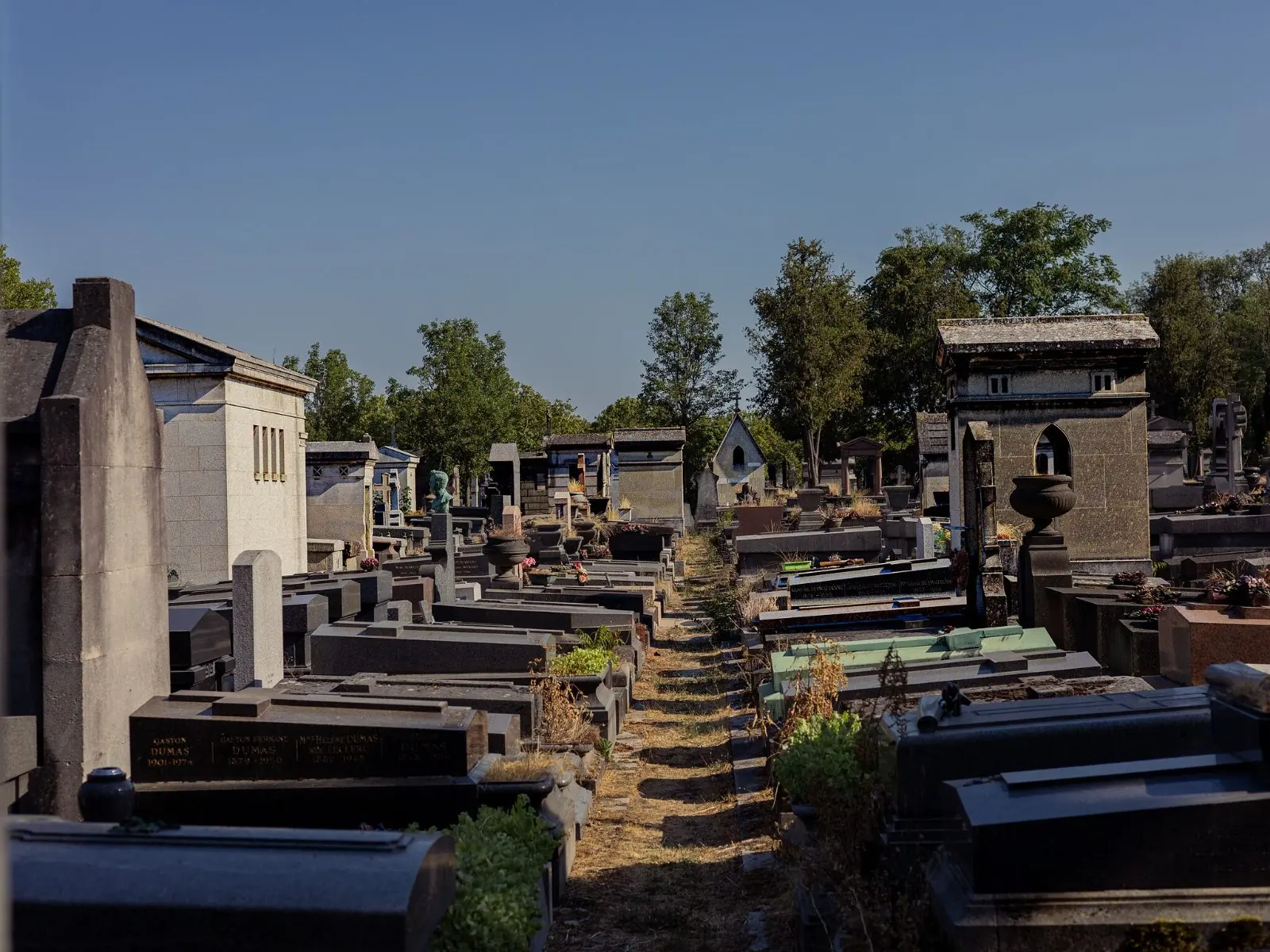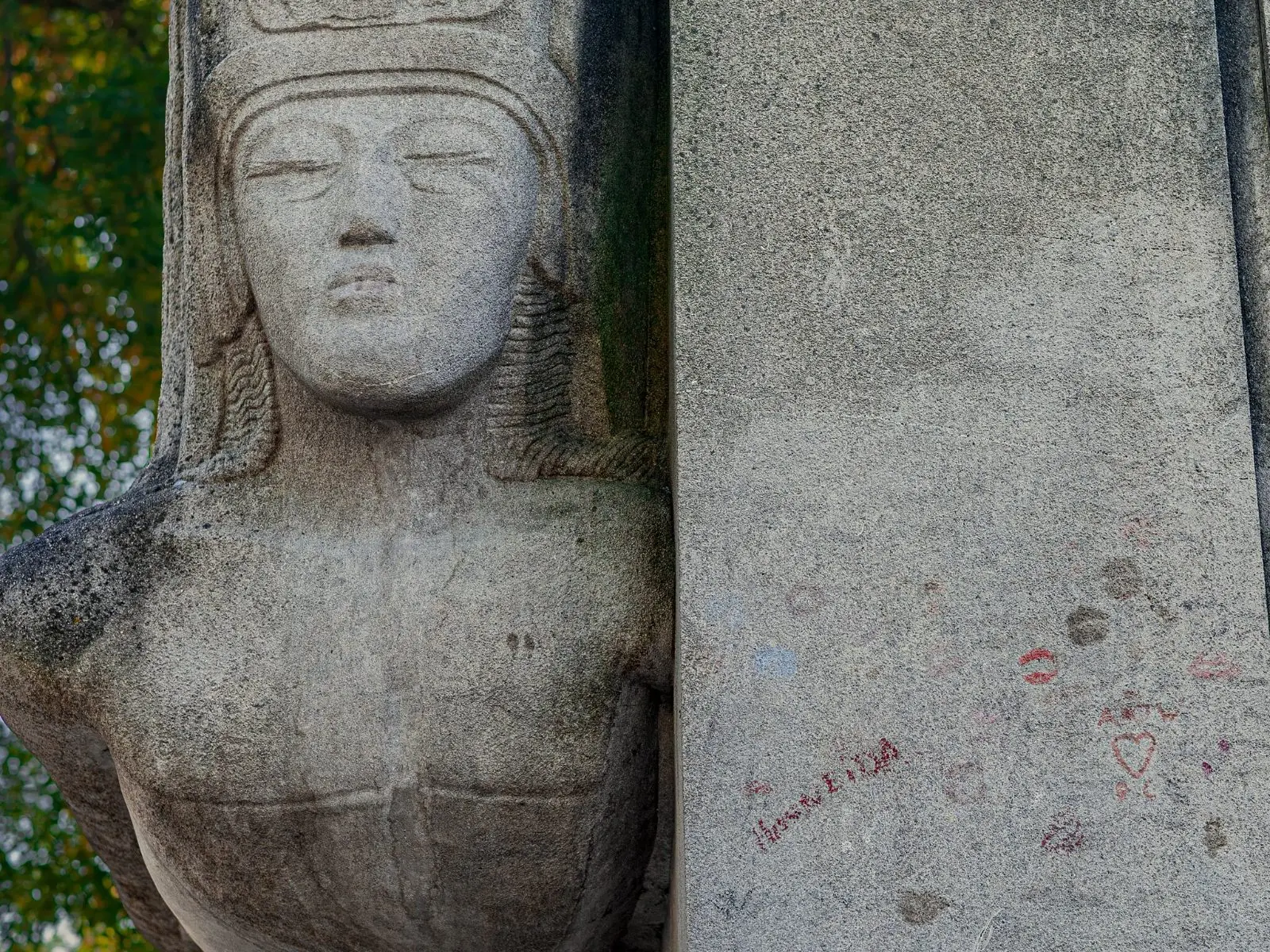
At the eastern boundary of Père Lachaise, in division 76, there is a plain stretch of wall with a carved plaque on it and, usually, fresh wreaths at the base. It is the least visually impressive thing in the cemetery and the most politically charged twenty metres in Paris.
On 28 May 1871, one hundred and forty-seven captured Communards were lined up against it, shot, and buried in a trench where they fell.
What the Commune was
In September 1870 the French army was destroyed at Sedan, Napoleon III was captured, and the Second Empire collapsed. Paris was besieged by the Prussians through a winter of genuine starvation — the city ate its zoo — and surrendered in January 1871.
The new national government, seated at Versailles and dominated by monarchists, then tried to disarm the Parisian National Guard. On 18 March the attempt failed, the troops sent to seize the cannon on Montmartre fraternised with the crowd instead, and the government withdrew from the city altogether.
What filled the vacuum was the Commune de Paris: a municipal government elected on 26 March, radical, improvised, and in power for seventy-two days. It separated church and state, abolished night work in bakeries, remitted rent arrears from the siege, handed abandoned workshops to worker cooperatives, and made schooling free and secular. Whether it was the first workers’ state or a doomed municipal insurrection has been argued about ever since, largely along the lines you would predict.
The Semaine sanglante
On 21 May the Versailles army entered the city through an undefended gate at Point-du-Jour. What followed is known as the Semaine sanglante, the bloody week: eight days of street fighting from west to east, barricade by barricade, with the Communards falling back through their own arrondissements.
By 27 May the fighting had reached Belleville and Ménilmontant, the last Communard districts, and Père Lachaise itself. Fighting took place inside the cemetery through that night — among the tombs, in the dark, hand to hand. Accounts from both sides describe it as the worst thing any of them had seen, and the cemetery’s monuments still carry damage from it.
The following day, the remaining prisoners taken in the cemetery were brought to the wall at the south-eastern corner. One hundred and forty-seven were shot there and buried in an open trench.
That was one incident among many. Across the week, summary executions took place at the Parc Monceau, at the Lobau barracks, at the École Polytechnique, at Mazas. The total number of Parisians killed during the Semaine sanglante has been disputed for a century and a half; the older figures of twenty or thirty thousand have been revised downward by recent research, but the scale remains enormous and the killing remains overwhelmingly one-sided.
Why this wall became the memorial
Not because it saw the most deaths. It did not.
It became the memorial because of where it is. Père Lachaise was, by 1871, the cemetery of the Parisian bourgeoisie — the address that respectable families had spent fifty years competing to buy into after the 1817 transfers. To shoot workers against its outer wall and bury them in a trench was, whether the officers involved intended it or not, an act with a very legible geography.
The trench was inside the cemetery, but at its edge, in the ground nobody had wanted. The argument about who the city belongs to is built into the location, and everybody understood that immediately.
What has happened there since
Pilgrimage, and repeated attempts to prevent it.
Under the Third Republic the anniversary march to the wall became an annual fixture of the French left, and for long periods the authorities banned it, policed it heavily, or arrested people at it. The amnesty for surviving Communards did not arrive until 1880. The Mur des Fédérés — the name comes from the fédérés, the National Guard battalions that had federated in March 1871 — became a fixed point in French political ritual, visited by successive generations of socialist and communist leaders, and by very large crowds at moments of political heat.
The wall itself has been altered over the years. The plaque now on it — aux morts de la Commune, 21–28 mai 1871 — was placed in 1908. The ground around it filled up with the graves of later figures of the French left who asked to be buried near it, which is why the surrounding divisions read like a directory of twentieth-century French communism.
A little way along the same eastern wall, in division 97, are the memorials to the deportations: a group of sculptures placed from 1949 onwards for the concentration camps and the French Resistance. The two sets of monuments are not related, but they ended up in the same corner of the same cemetery for the same reason — this is where Paris puts the dead it argues about.
Why the numbers are disputed
The figure of 147 at the wall is firm; the figure for the week as a whole is not, and the argument about it is itself part of the history.
The high estimates — twenty thousand, thirty thousand, in some accounts more — come from contemporary Communard and sympathetic sources, and from a nineteenth-century press with every incentive to round upward in both directions. They passed into the standard account and stayed there for a century.
More recent work, principally by the historian Robert Tombs, has gone back to the burial records, the army’s own returns and the municipal registers, and arrived at a substantially lower figure — in the range of six to ten thousand killed. That is still a massacre of a scale almost without parallel in nineteenth-century western Europe, inflicted by a national army on the population of its own capital, and the revision does not soften it.
What the argument shows is how contested this ground remained. For a hundred and fifty years, the number of dead has been a political claim as much as a historical one, and people have chosen their figure accordingly. It is worth knowing that when you read a plaque.
Standing there
It is the quietest stop on any walk through this cemetery, and the one people remember.
Part of that is the wall itself, which does nothing to help you. There is no sculpture, no allegory, no figure to look at — just brick, a plaque, and whatever flowers were left last. After two hours of nineteenth-century funerary art competing for your attention, the absence is startling.
Part of it is the arithmetic. One hundred and forty-seven people, against a wall about twenty metres long, in the space of a morning.
And part of it is that the ground you are standing on is the trench. There are no individual names because there were no individual graves. Whoever is under the gravel is under it in the order they fell.
Getting there
Division 76 is at the eastern edge, on the avenue Circulaire. The nearest gate is the Porte Gambetta at 55–57 rue des Rondeaux (métro Gambetta, lines 3 and 3bis), about ten minutes’ walk; the Porte de la Réunion is closer still but has steps; check its current opening status before travelling.
If you are walking down from the top of the cemetery, come to it from Victor Noir in division 92 — a journalist shot dead by the Emperor’s cousin eighteen months before the Commune, whose funeral brought a hundred thousand people onto the streets. Walking from one to the other, in that order, is the most useful ten minutes anyone can spend here.