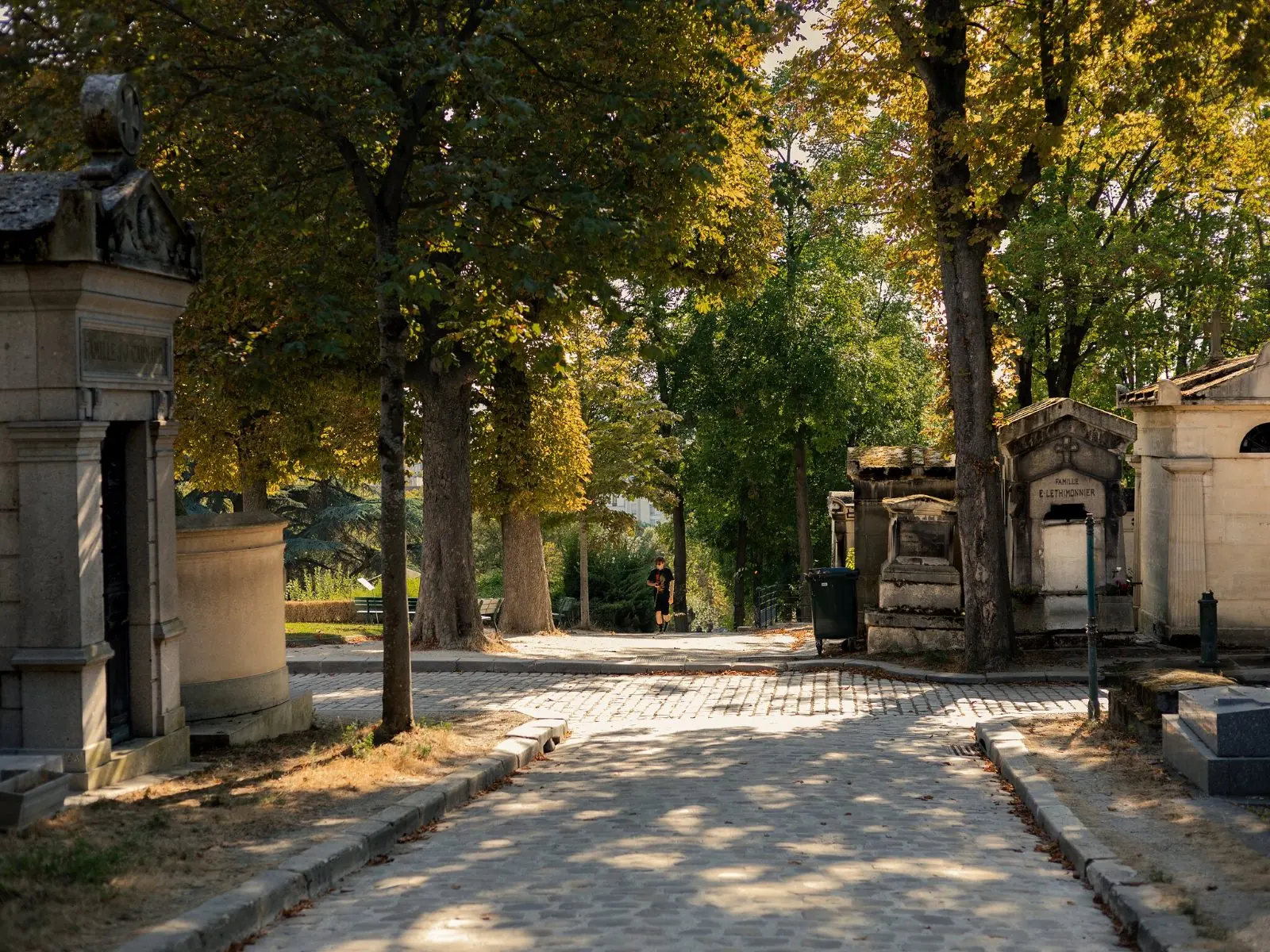
Small-group walking tour
Two hours on foot, downhill from the Gambetta gate to the boulevard, with about a dozen graves and the history that connects them.
- 2 hours
- Maximum 20 people
- €19 per person
Book nowSee the route and what’s included →
Paris, 20th arrondissement
Two hours on foot, downhill from the top gate, with about a dozen graves and the two centuries of history that connect them. Entry to the cemetery is free; what you are booking is a guide.
Entry is free
Père Lachaise is a public cemetery. You are paying for a guide, not for admission.
Twenty people maximum
Small enough that you can hear, ask questions and stop when you want to.
Licensed guides
Every walk is led by a holder of the French carte professionnelle de guide-conférencier.
Two hours
Downhill from the top gate. Everyone else does it the other way round.
Why come at all
Père Lachaise opened in 1804 on the site of a Jesuit retreat, laid out by Alexandre-Théodore Brongniart as a garden rather than a churchyard: winding paths, planted trees, a hill with a view of the city. It was a new idea, and for the first decade Parisians hated it. It was too far out, and it was not a churchyard, and almost nobody would be buried in it.
What changed it was a marketing decision. In 1817 the administration moved Molière and La Fontaine here with a great deal of ceremony, and Héloïse and Abélard shortly after. Plot sales went from a trickle to a flood. By 1830 there were more than 33,000 graves, and being buried at Père Lachaise had become a statement about the kind of family you were.
Two centuries later it covers 44 hectares with 15 kilometres of paths, takes around 3 million visitors a year, and still holds around around 10,000 funerals. That last number is the one worth holding on to. This is not a museum with graves in it. It is a working cemetery that happens to contain the best open-air collection of nineteenth-century funerary sculpture in Europe, and the people you will pass on a Tuesday morning are not all tourists.
A guide is not necessary. You can walk in free, any day, and many people should. What a guide gets you is the shape of the thing — which graves connect to which, why a monument looks the way it does, and what the four hundred metres between two famous names actually contains.
The walk
Both start at whichever gate makes the route work, both are led by a licensed guide-conférencier, and neither of them charges you to enter a public cemetery.
Two hours on foot, downhill from the Gambetta gate to the boulevard, with about a dozen graves and the history that connects them.
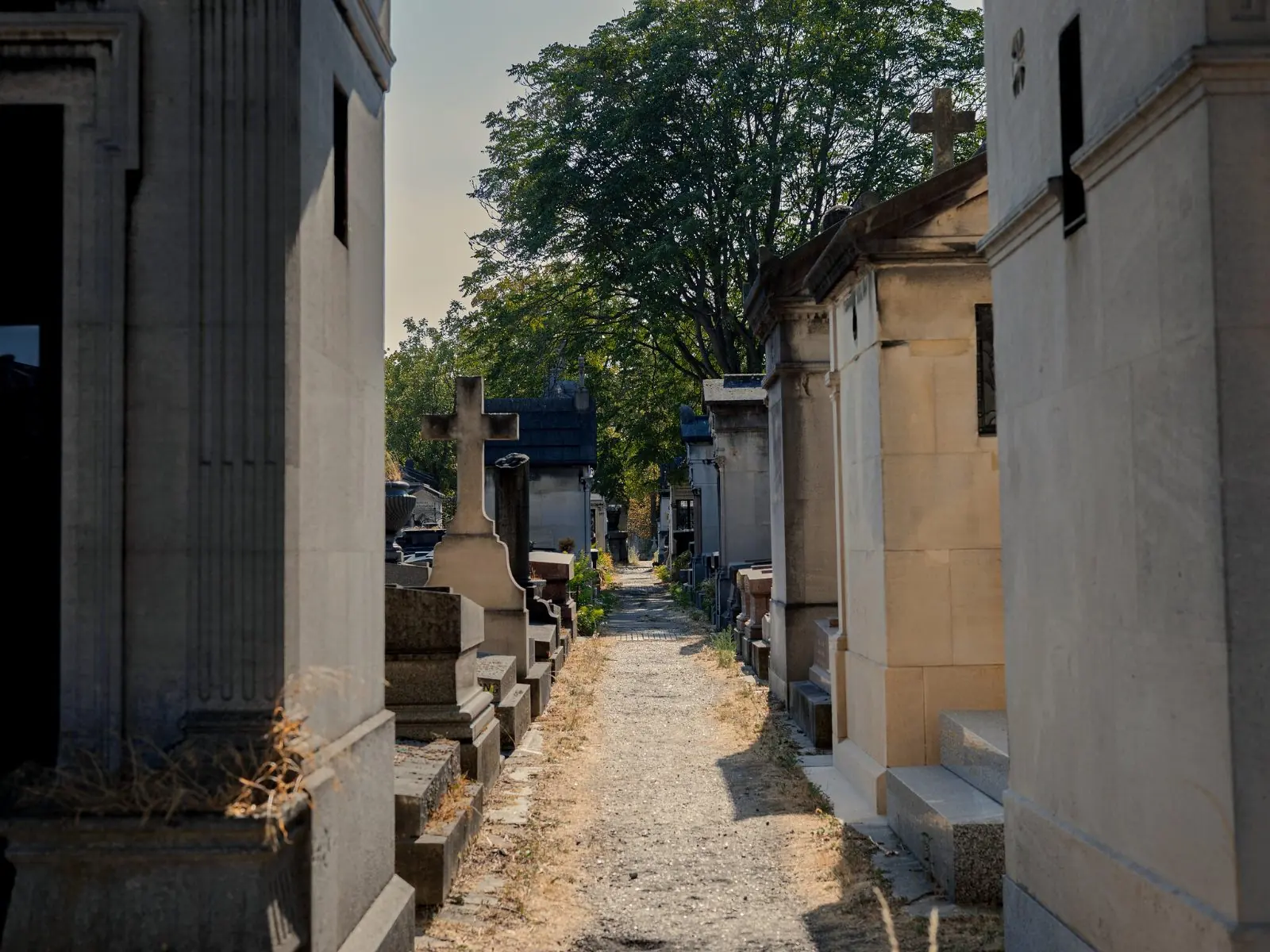
Your group, your guide, your route — built around the people you have actually come to see, at a pace that suits whoever is walking slowest.
Who is buried here
1854–1900 · Writers
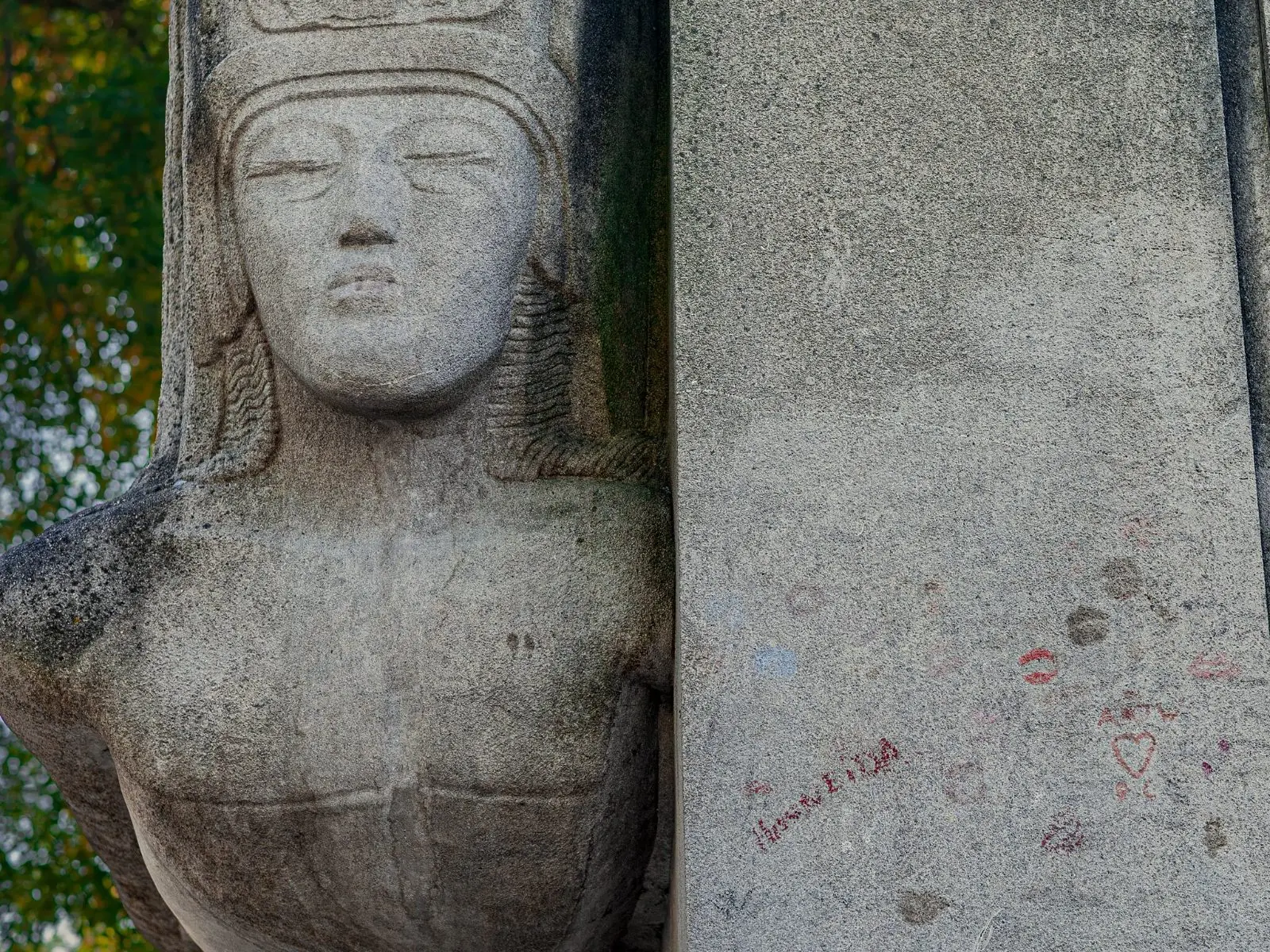
Jacob Epstein's winged monument, glazed since 2011 to stop the lipstick eating the stone.
Read the full entry →
1943–1971 · Musicians
A flat stone behind a low barrier, with a Greek inscription chosen by his father.
Read the full entry →
1915–1963 · Musicians
Buried under her married name, Lamboukas, with her father, her daughter and her second husband.
Read the full entry →
1810–1849 · Musicians
Clésinger's weeping muse over the grave. His heart is in Warsaw.
Read the full entry →
1871–1922 · Writers
A plain black marble family tomb, shared with the brother who got the book into print.
Read the full entry →
1622–1673 · 1621–1695 · Writers
The 1817 transfers that rescued a failing cemetery. Whether the right bones arrived is still argued.
Read the full entry →
Plan your visit
Both seasons, all five gates, and the fifteen-minute clearance nobody warns you about.
Check today's hours →
Which métro station to use, what the ground is like, and how to behave at a working cemetery.
Read before you go →
No. Here is what is actually being sold when a site advertises Père Lachaise tickets.
See what free means →
A schematic plan, and an explanation of why the division numbers make no geographical sense.
Find your bearings →
Journal
7 min read
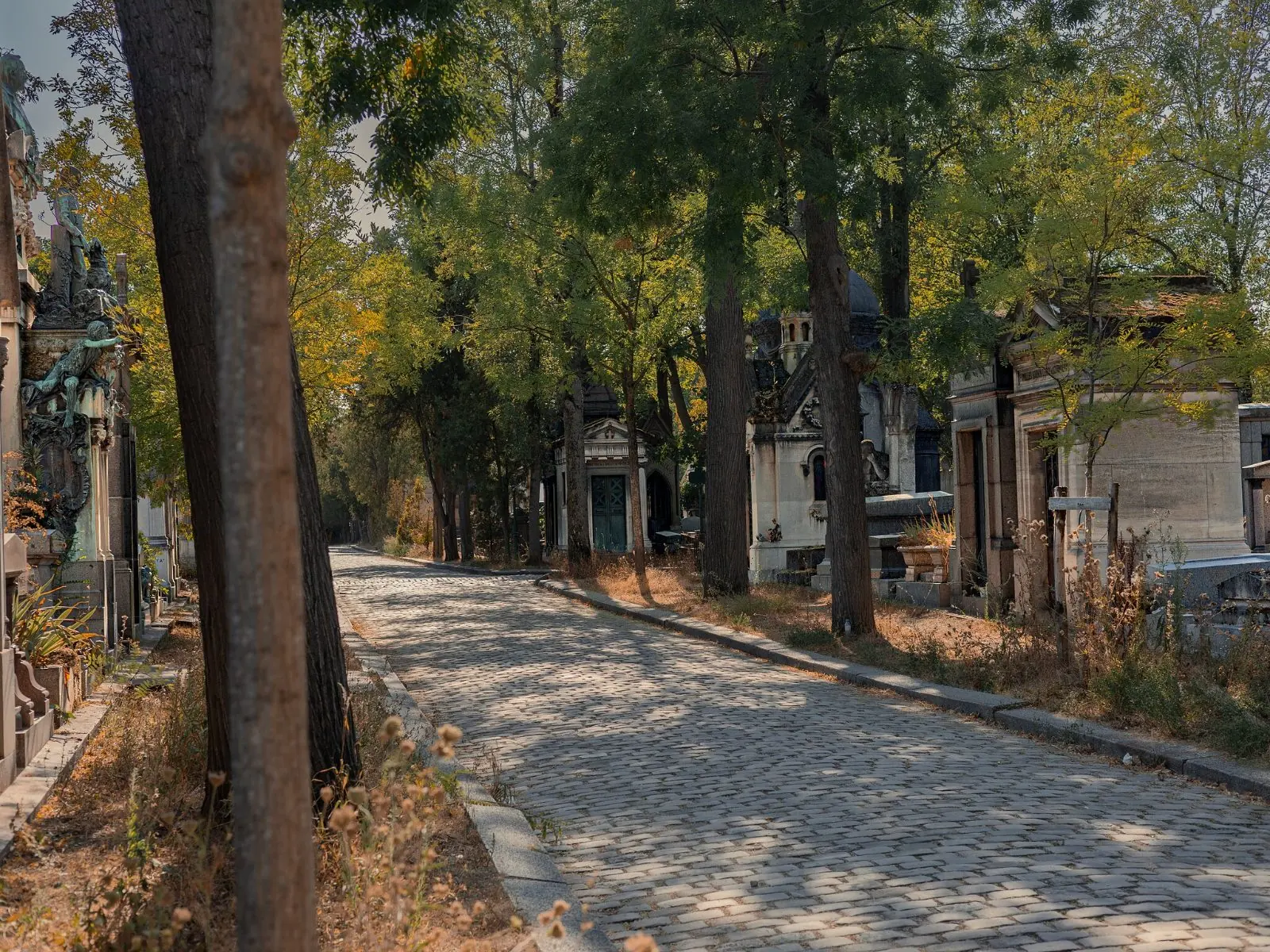
Free to enter, open every day, and about thirty metres taller at one end than the other. Here is what a visit actually involves this year, in the order you will need it.
6 min read
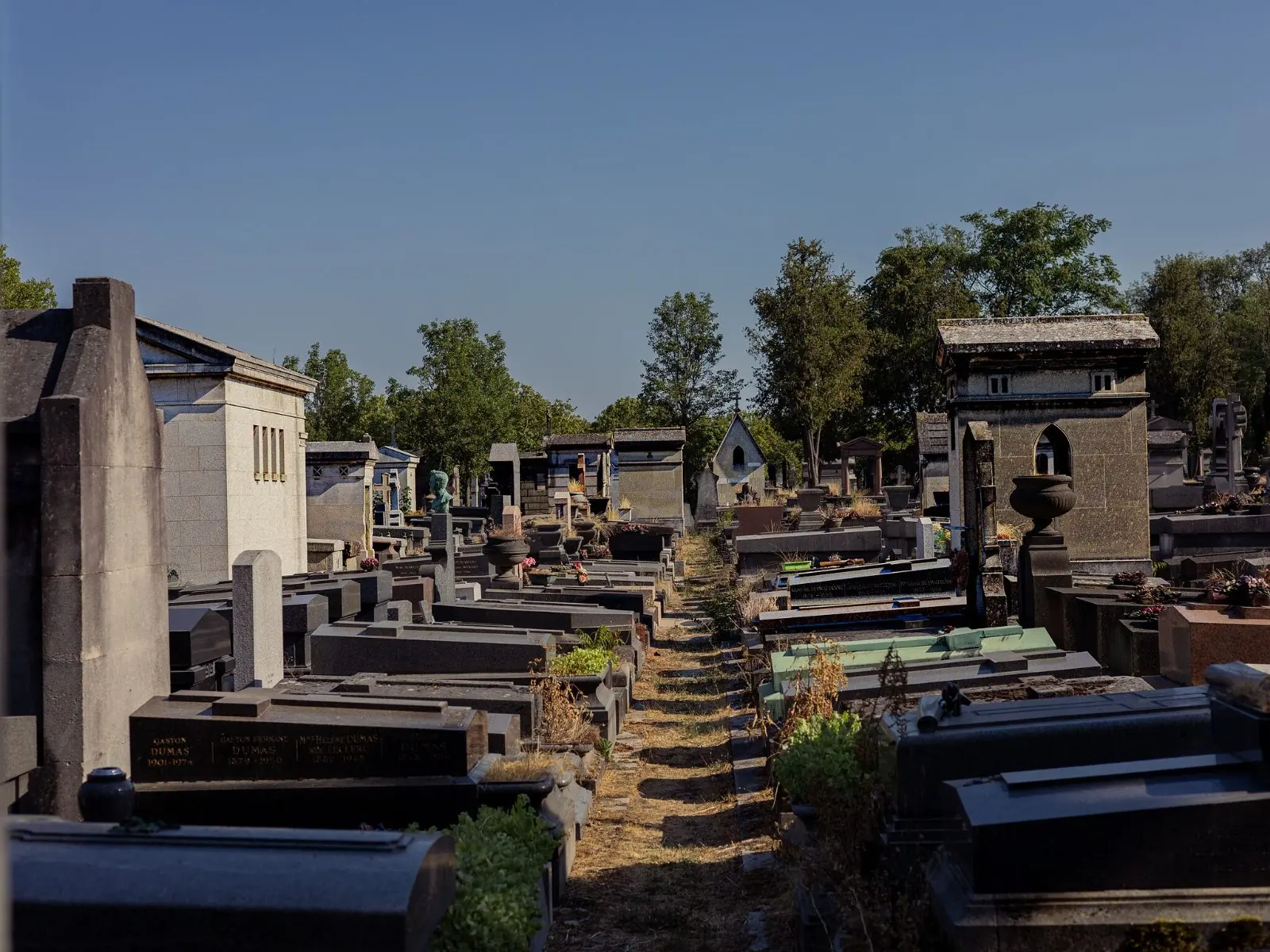
Twenty graves, twenty division numbers, and an order to walk them in that runs downhill from the Gambetta gate to the boulevard without doubling back once.
6 min read
A twenty-tonne block of English limestone, an anonymous donor, a policeman guarding it from public decency, and a hundred years later a wall of glass. The strangest commission in the cemetery.
Two hours, twenty people maximum, starting at the top of the hill so that every step of it is downhill. Entry to the cemetery is free — you are paying for the guide.